By: Kabera Moses Bahati | Columnist | WBN NEWS Africa | June 13, 2026
Across Kenya, refugees and asylum seekers are proving that with the right opportunities, they can be powerful contributors to economic growth, community resilience, and shared prosperity. While many continue to face barriers to stable employment, growing investments in livelihoods, entrepreneurship, and skills development are helping transform lives and strengthen local economies.
For thousands of displaced people living in Kenya, decent work represents far more than a source of income. It offers dignity, self-reliance, and a chance to contribute meaningfully to the communities they now call home. Yet many refugees and asylum seekers remain excluded from formal employment opportunities and face challenges accessing financial services, business networks, and professional pathways that match their skills and experience.
As a result, many are forced into informal or low-paying jobs that provide limited security and few opportunities for advancement. The consequences often extend beyond individual workers. Families struggling with unemployment or underemployment may find it difficult to afford education, healthcare, and other essential needs. At the same time, valuable skills and talents remain underutilized, reducing opportunities for innovation and local economic development.
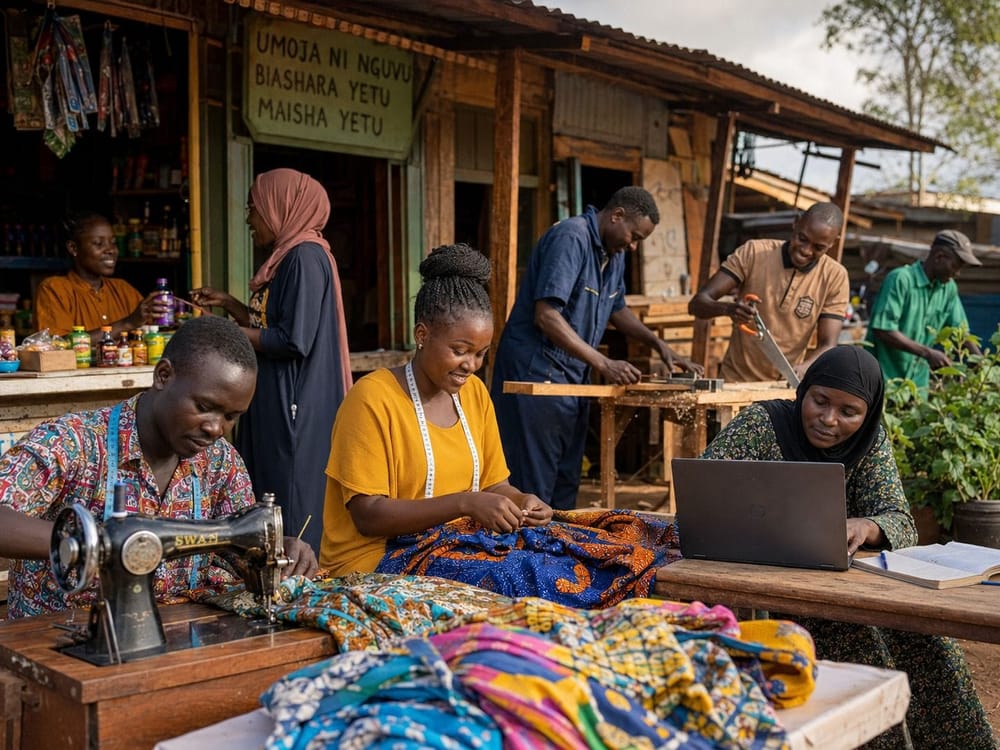
Despite these challenges, refugee and host communities across Kenya continue to demonstrate remarkable resilience and determination. Small businesses, vocational training initiatives, agricultural enterprises, artisan groups, and digital ventures are creating pathways to sustainable livelihoods. Refugee-led organizations, working alongside local partners, are helping individuals build practical skills, strengthen household incomes, and contribute to community development.
Experience from Kenya and around the world shows that when displaced people can work, learn, and invest in their futures, the benefits often reach far beyond individual households. Local markets become stronger, businesses expand, and communities are better equipped to withstand economic shocks. Inclusive economic opportunities are therefore not only a humanitarian necessity but also a smart investment in sustainable development.
The journey ahead requires continued collaboration among government institutions, humanitarian organizations, the private sector, refugee-led groups, and host communities. By expanding access to skills development, entrepreneurship, and decent work, Kenya can unlock the full potential of refugees and asylum seekers while building a stronger, more inclusive economy.
The future is promising. With the right support and opportunities, refugees and asylum seekers can continue creating businesses, generating employment, and helping shape a more prosperous Kenya for generations to come.
"Finding decent work is a pathway to self-reliance, dignity, and the ability to contribute to the communities they call home."
"Entrepreneurship, skills development, and inclusive economic opportunities are helping build stronger households, resilient communities, and shared prosperity."
"Supporting access to skills, entrepreneurship, and decent work can help refugees and asylum seekers move from dependence to greater self-reliance."
"When displaced people can work, learn, and invest in their futures, the benefits often extend beyond individual families."
👇🏼👇🏼👇🏼
Kilifi County GovernmentThe Global NGO Stakeholders Summit
Editor: Joseph James Udoh
WBN Global News Desk
📩 newsdesk@wbnn.news The advantage---
TAG: #Africa #Refugees #Livelihoods #Selfreliance #Kenya #Inclusion #Jobs #Sustainability #WBN #Africa Edition #WBN News #WBN News Africa