By: Kabera Moses Bahati | Columnist | WBN NEWS Africa | July 28, 2026
Across Africa, millions of refugees and asylum seekers have escaped conflict, violence, persecution, and climate-related disasters in search of safety. Emergency shelters provided by humanitarian organizations and host governments have played a critical role in saving lives during times of crisis. Yet for many displaced families, what was intended to be a temporary solution has become a way of life lasting years or even decades.
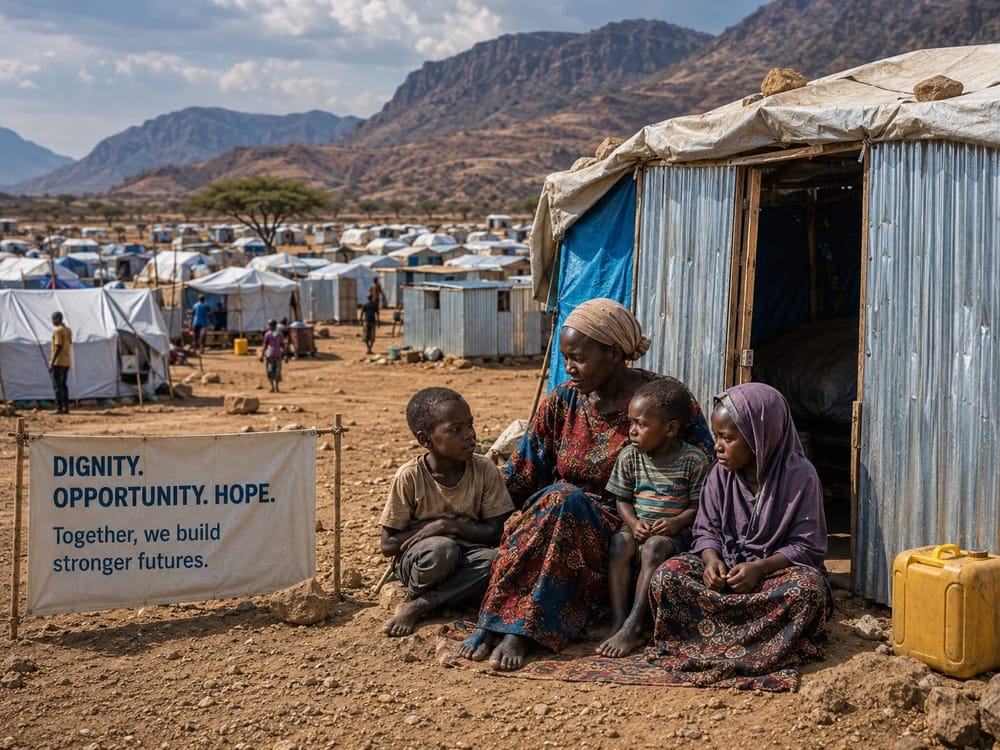
Tents, tarpaulins, and iron-sheet structures offer immediate protection, but they are not designed for prolonged living. In many refugee settlements located in remote or environmentally harsh regions, these shelters struggle to withstand intense heat, heavy rainfall, strong winds, and cold nights. As materials deteriorate, families face constant repairs while coping with housing that often lacks comfort, privacy, and long-term security.
The challenges extend well beyond housing. Refugee settlements are frequently situated far from major towns, markets, and employment opportunities, limiting access to sustainable livelihoods. Inadequate infrastructure, limited electricity, unreliable internet connectivity, and restricted transportation make it difficult for residents to build businesses, access education, or develop new skills. These barriers slow the journey toward financial independence and self-reliance.
Despite these obstacles, refugee communities continue to demonstrate extraordinary resilience. Across the continent, families establish small businesses, cultivate available land, pursue education, develop professional skills, and work alongside host communities to strengthen local economies. Schools, health centers, and community support networks created within refugee settlements reflect a shared determination to build meaningful lives despite uncertain circumstances.
Growing recognition among governments, humanitarian agencies, development partners, and local communities is shifting the conversation from emergency response to long-term development. Durable housing, improved infrastructure, expanded educational opportunities, and stronger livelihood programs are increasingly viewed as essential investments that benefit both displaced populations and their host communities.
As displacement becomes more prolonged across many regions, sustainable solutions must go beyond providing shelter alone. Safe housing combined with access to education, healthcare, employment, and economic inclusion offers refugees the opportunity to rebuild their futures with dignity and confidence. By working together, governments, humanitarian organizations, development partners, and host communities can help create resilient settlements where families move beyond survival and embrace lasting hope, stability, and opportunity.
"Emergency shelters save lives, but long-term stability requires more than temporary housing."
"Refugees seek not only protection but also the opportunity to rebuild their futures with dignity."
Editor: Joseph James Udoh
WBN Global News Desk
đź“© newsdesk@wbnn.news The advantage---
TAG: #Africa #Refugees #Housing #Shelter #Resilience #Livelihoods #Humanitarian #WBN Africa #Africa Edition #WBN Africa News #WBN News Africa #Update