By: Kwemi Eve Titus | Columnist | WBN NEWS Africa | August 6, 2026
Every day, millions of ears of corn are harvested around the world, and with them, countless strands of corn silk are discarded as waste. Yet these delicate, thread-like fibers, known scientifically as Stigma maydis, have been valued in traditional medicine for centuries and are now drawing renewed attention from researchers exploring their nutritional and therapeutic potential.
Corn silk is the fine, silky thread that grows from the tip of an ear of corn, with each strand connected to an individual kernel during the plant's pollination process. While often overlooked, it is edible and contains a unique blend of nutrients and naturally occurring plant compounds.
Historically, corn silk has been used by the Aztecs, Mayans, Native Americans, and practitioners of traditional Chinese medicine to support urinary health, reduce swelling, and address a variety of other ailments. Today, herbal preparations remain in use in parts of the United States, France, and Turkey.
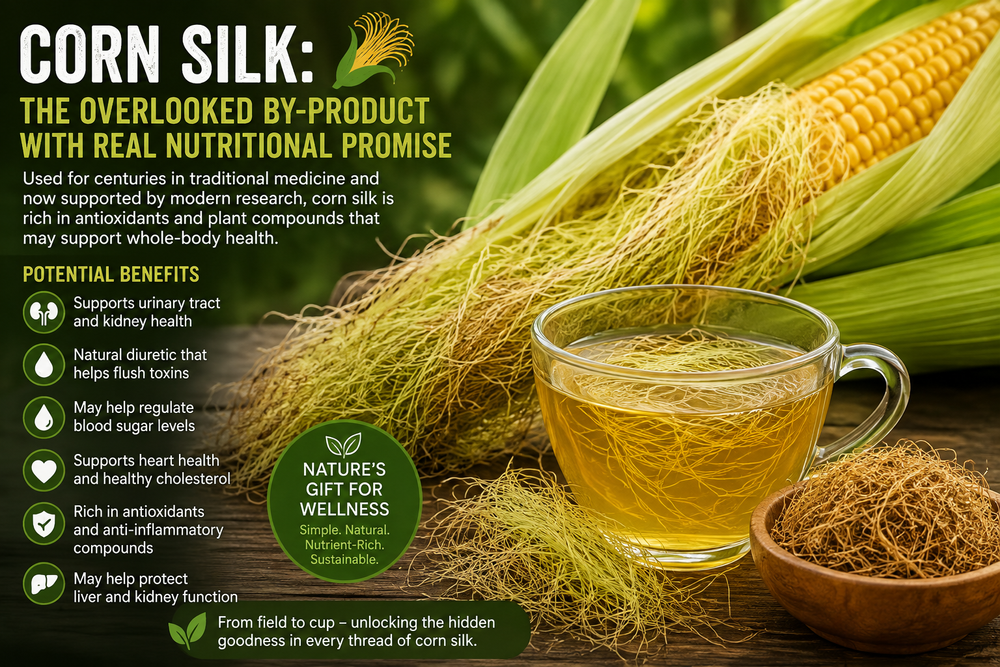
Modern research has identified several beneficial compounds within corn silk, including flavonoid antioxidants, phenolic acids, polysaccharides, plant sterols, dietary fiber, vitamin C, vitamin K, and potassium. Although most evidence comes from laboratory and animal studies, researchers have observed several promising health benefits.
Corn silk is best known for supporting urinary tract and kidney health. Its natural diuretic properties may increase urine production, helping flush bacteria from the urinary tract while reducing the concentration of substances that contribute to kidney stone formation.
Studies have also explored its role in blood sugar regulation, with polysaccharides and flavonoids showing potential to support healthy glucose metabolism. Additional research suggests corn silk extracts may help lower LDL cholesterol and triglycerides while promoting healthier blood vessel function.
Its rich antioxidant content may also help protect cells from oxidative stress associated with chronic diseases, while early studies indicate possible anti-inflammatory, liver-protective, and kidney-protective properties. Researchers caution, however, that more human clinical trials are needed before definitive health claims can be made.
Beyond its medicinal promise, corn silk represents an opportunity to reduce agricultural waste by transforming an overlooked by-product into teas, extracts, and functional food ingredients. Generally considered safe in food amounts, such as tea, it should still be used cautiously by people with corn allergies or those taking diuretic medications, and anyone considering therapeutic use should consult a healthcare professional.
As science continues to investigate this humble plant fiber, corn silk serves as a reminder that valuable nutritional resources can often be found in the most unexpected places. What was once routinely discarded may one day play a meaningful role in promoting health, reducing waste, and creating a more sustainable food system.
Editor: Joseph James Udoh
WBN Global News Desk
📩 newsdesk@wbnn.news The advantage---
TAG: #Herbal Wellness #Corn Silk #Nutrition #Wellness #Health #Antioxidants #Sustainability #Research #WBN Africa #Africa Edition #WBN Africa News #WBN News Africa #Update #Africa