By: Ngoe Thomas Itoe | Columnist | WBN NEWS Africa | June 6, 2026
The persistent rise in fuel prices continues to shape economic realities across Nigeria, affecting households, businesses, and key sectors of the economy. As transportation and energy costs increase, the effects are felt throughout the supply chain, influencing the prices of goods and services and placing additional pressure on consumers already navigating a challenging economic environment.
For many businesses, particularly small and medium-sized enterprises, higher fuel costs have translated into increased operating expenses. Companies that rely on transportation for the movement of goods face higher logistics costs, while manufacturers contend with rising energy expenses. These additional costs are often passed on to consumers, contributing to inflation and reducing purchasing power.
The transportation sector has been among the most visibly affected. Commercial drivers, logistics operators, and commuters are spending more on fuel, resulting in higher transport fares and increased costs for moving agricultural produce and essential commodities across the country. This has had a direct impact on food prices, making basic necessities more expensive for many families.
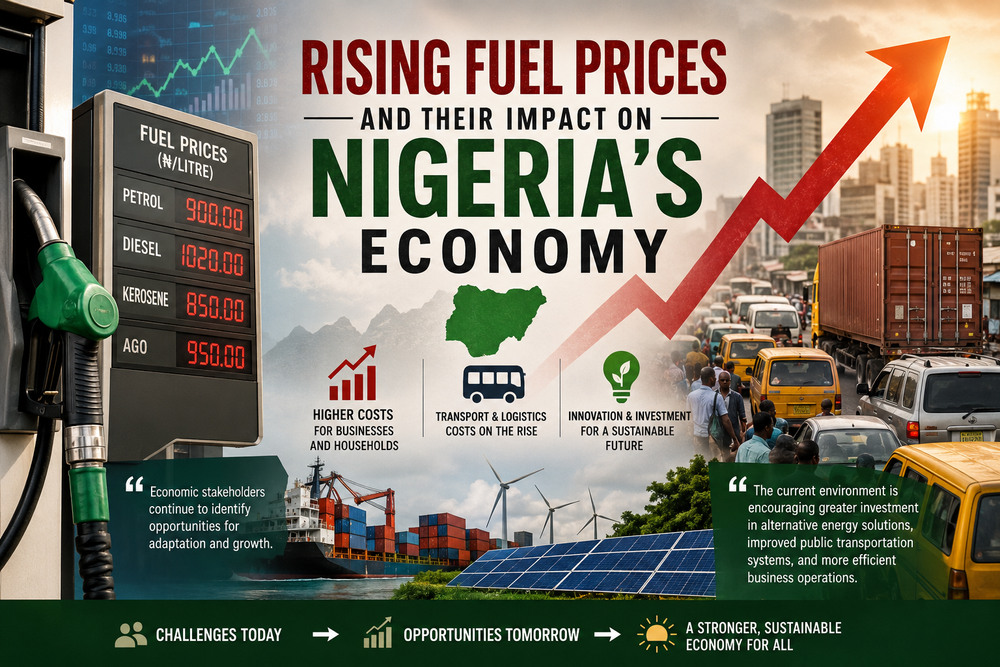
Despite these challenges, economic stakeholders continue to identify opportunities for adaptation and growth. The current environment is encouraging greater investment in alternative energy solutions, improved public transportation systems, and more efficient business operations. Many organizations are exploring innovative ways to reduce energy consumption and improve productivity, helping to build resilience in a changing economic landscape.
Economic experts also note that reforms aimed at creating a more market-driven energy sector have the potential to attract investment, improve supply efficiency, and strengthen long-term economic stability. While the transition may be difficult in the short term, the focus remains on building a more sustainable and competitive economy.
"The current environment is encouraging greater investment in alternative energy solutions, improved public transportation systems, and more efficient business operations."
"Economic stakeholders continue to identify opportunities for adaptation and growth."
As Nigerians continue to navigate the effects of higher fuel prices, the determination of businesses, workers, and communities remains a powerful force. Through innovation, resilience, and strategic investment, the country has an opportunity to transform present challenges into long-term economic progress, creating a stronger and more sustainable future for generations to come.
Editor: Joseph James Udoh
WBN Global News Desk
📩 newsdesk@wbnn.news The advantage---
TAG: #Nigeria #Fuel Prices #Economy #Inflation #Business #Transport #Growth #WBN #Africa Edition #WBN News #WBN News Africa