By: Mapenzi Kaposho Akso | Columnist | WBN NEWS Africa | July 5, 2026

As cities around the world continue to warm under the effects of climate change, architects and urban planners are embracing innovative building designs that help reduce heat while improving quality of life. Instead of relying solely on energy-intensive air conditioning systems, many are turning to passive cooling strategies that work with nature to create healthier, more sustainable urban environments.

The growing challenge stems from the urban heat island effect, where concrete, asphalt, and dark rooftops absorb and store heat during the day, keeping cities significantly warmer than surrounding rural areas. Rising temperatures increase health risks, drive up electricity demand, and place greater strain on public infrastructure during prolonged heatwaves.

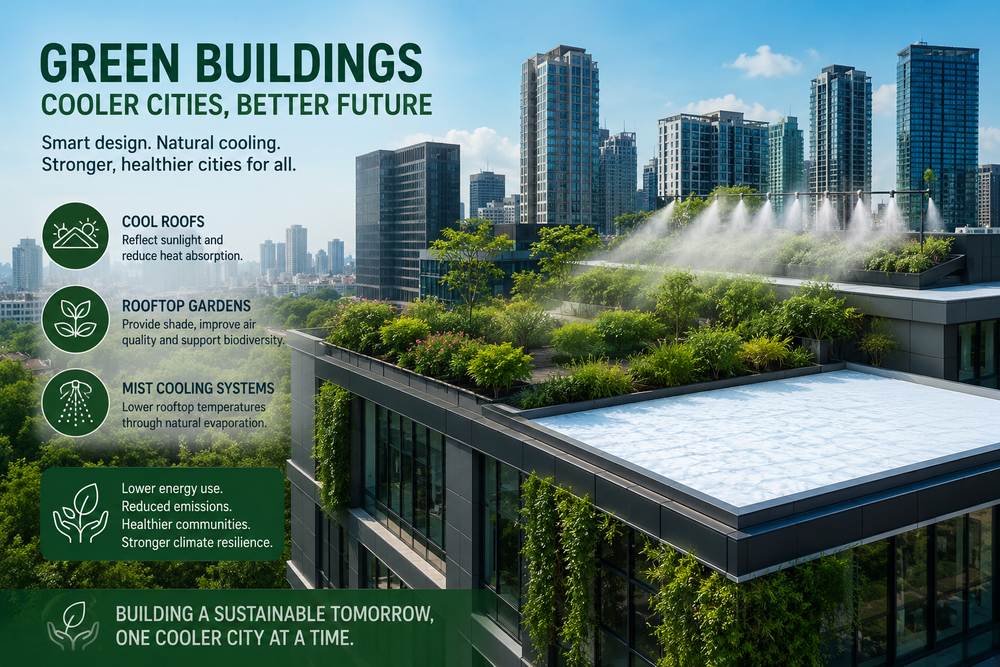
To address these challenges, architects are incorporating reflective cool roofs that bounce sunlight away from buildings rather than absorbing it. These roofs help lower indoor temperatures and reduce the need for mechanical cooling. Rooftop gardens are also gaining popularity, with plants providing natural insulation, cooling surrounding air, supporting biodiversity, and improving air quality in densely populated neighborhoods.

Another promising innovation is rooftop mist-based evaporative cooling. By releasing ultra-fine water droplets that evaporate quickly, these systems remove heat from roof surfaces in much the same way perspiration cools the human body. The result is cooler buildings, lower energy consumption, and greater comfort for occupants without significantly increasing electricity use.

The benefits extend well beyond individual buildings. As more structures adopt passive cooling technologies, cities can reduce peak electricity demand, lower greenhouse gas emissions associated with cooling, and lessen the intensity of urban heat islands. These improvements contribute to healthier communities, greater climate resilience, and more reliable energy systems during periods of extreme heat.

Climate-responsive architecture is increasingly becoming an essential part of urban planning rather than an optional feature. By combining thoughtful design with proven technologies, cities can better protect residents from rising temperatures while creating greener and more comfortable places to live.

As the world continues to adapt to a changing climate, green buildings offer a practical and hopeful path forward, demonstrating that smart design can help cities stay cooler, healthier, and more resilient for generations to come.

"Passive cooling strategies work with nature to create healthier, more sustainable urban environments."
"Green buildings are becoming essential infrastructure for protecting people from rising urban temperatures."
"Smart design can help cities stay cooler, healthier, and more resilient for generations to come."

Sources:
https://www.unep.org⁠
https://www.energy.gov⁠
https://www.epa.gov/heatislands⁠
https://www.worldgbc.org⁠

Editor: Joseph James Udoh


WBN Global News Desk
📩 newsdesk@wbnn.news The advantage---

TAG: #Climate #Resilience #Green #Buildings #Cooling #Architecture #Sustainability #WBN #Africa Edition #WBN News #WBN News Africa

Share this article
The link has been copied!