By: Kabera Moses Bahati | Columnist | WBN NEWS Africa | May 26, 2026

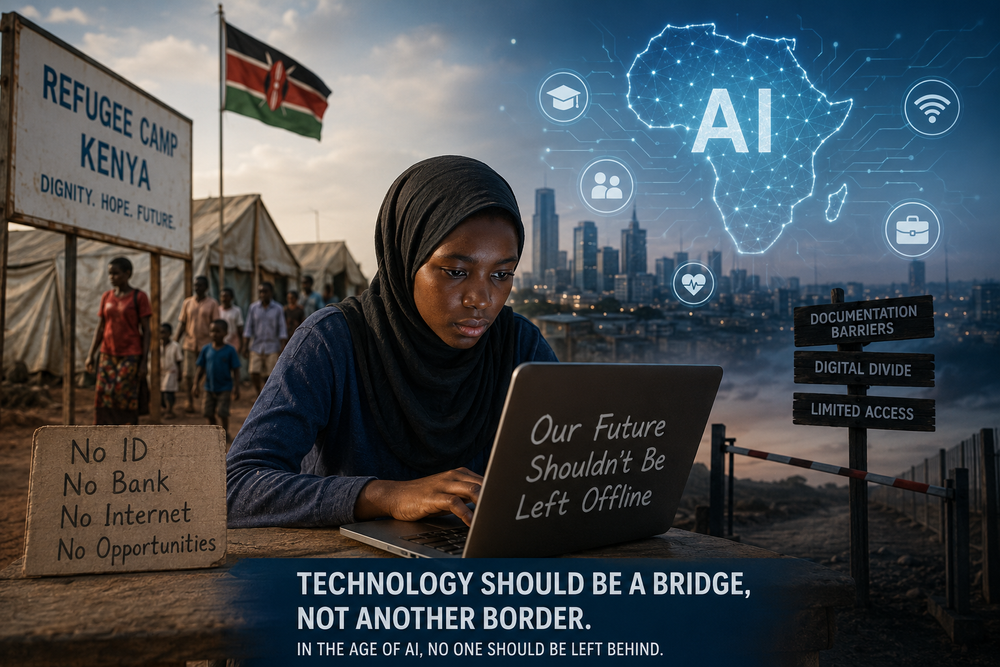
As the world races deeper into the age of Artificial Intelligence (AI) and digital transformation, many refugees and asylum seekers living in Kenya are at risk of being left behind. In a global economy increasingly shaped by technology, digital systems now influence access to education, healthcare, employment, banking, communication, and entrepreneurship. Yet for thousands of refugees living in camps and urban settlements, participation in this digital future remains difficult.

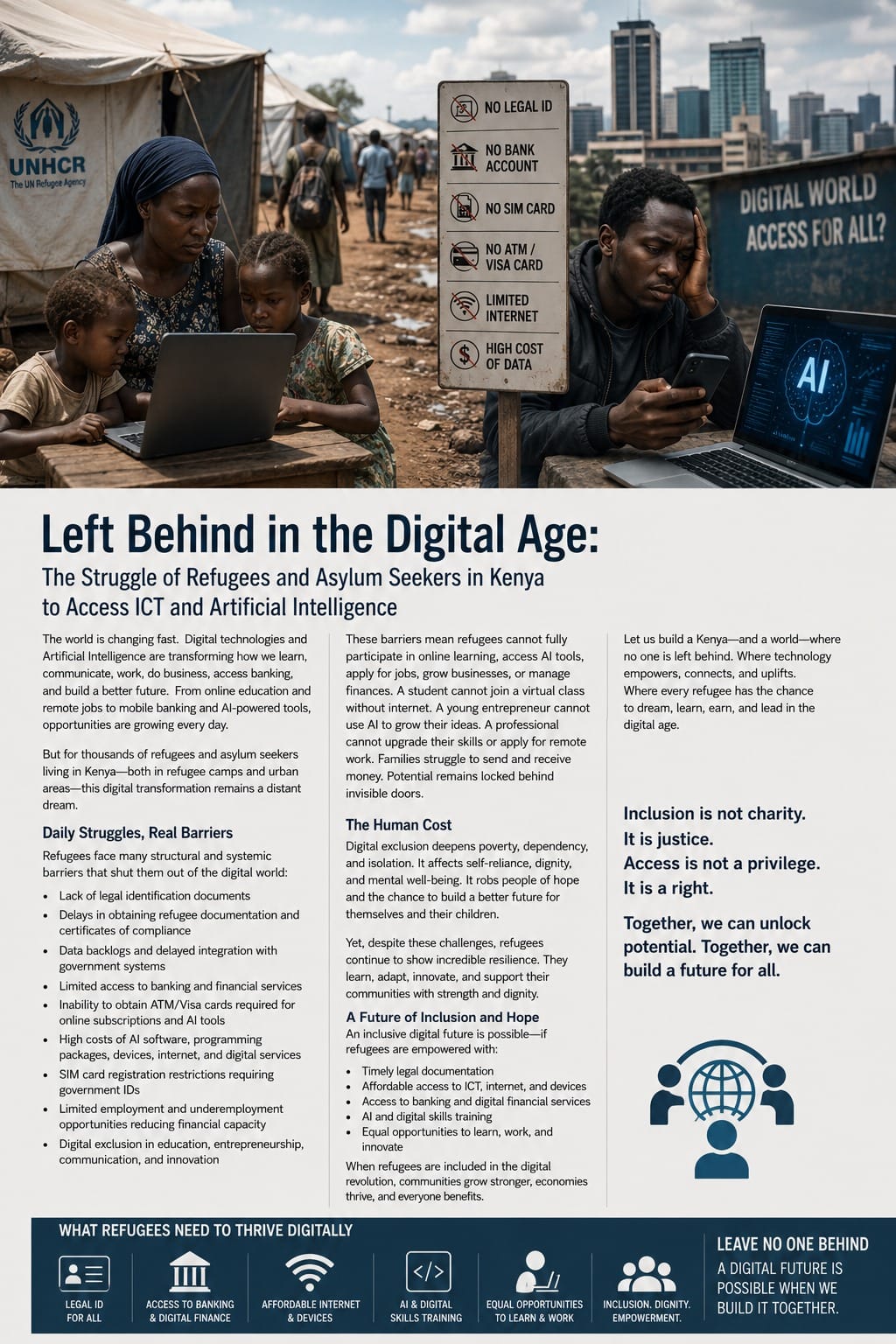
Many refugee youth pursuing education, online work, or digital entrepreneurship face serious barriers tied to documentation challenges. Delays in obtaining refugee identification documents, certificates of compliance, and government-recognized records often prevent them from registering SIM cards, opening bank accounts, accessing mobile money platforms, or securing ATM and Visa cards. Without these basic tools, many struggle to participate fully in today’s connected economy.

The cost of digital access adds another layer of difficulty. Smartphones, laptops, internet services, software subscriptions, and AI-powered tools remain out of reach for many refugees already dealing with unemployment, underemployment, and poverty. Some online platforms also require identity verification or payment systems that refugees cannot easily access.

The consequences of digital exclusion stretch far beyond technology itself. Interrupted education, limited communication, unemployment, and social isolation continue to affect many displaced communities. Talented refugee youth eager to learn coding, online business, remote work, and AI innovation often find themselves locked out of opportunities available to others around the world.

Yet despite these obstacles, resilience continues to define many refugee communities across Kenya. Through shared devices, community learning centres, peer support groups, and free online courses, many young people are still pushing forward in pursuit of knowledge and opportunity.

“Technology should be a bridge to dignity, opportunity, and inclusion, not another border.”
“The future is being written in code. It must be written for all of us.”

Advocates say stronger collaboration between governments, humanitarian organizations, technology companies, and local communities is urgently needed to create inclusive policies, affordable digital access, and expanded digital literacy programs.

As AI continues to shape the future, many believe refugees should not only survive the digital revolution, but also have the opportunity to help build it.

Editor: Joseph James Udoh


WBN Global News Desk
📩 newsdesk@wbnn.news The advantage---

TAG: #Kenya #Refugees #AI #Digital Access #Inclusion #Technology #Youth #WBN #Africa Edition #WBN News #WBN News Africa #Joseph James Udoh

Share this article
The link has been copied!